

 SAS
SAS HRS4R
HRS4R


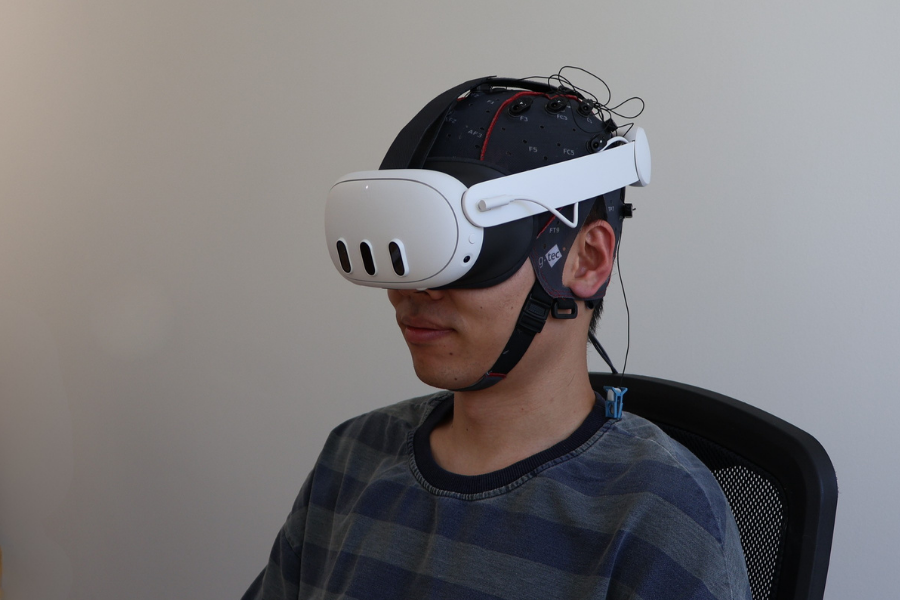
Researchers at the Institute of Measurement Science of the Slovak Academy of Sciences examined how prolonged post-stroke rehabilitation training in immersive virtual reality affects mental fatigue.
The study shows that even without physical movement, sustained mental training leads to a gradual increase in mental fatigue, which can be observed in EEG signals, particularly through changes in alpha activity over posterior brain regions. These neural patterns closely follow participants’ reported feelings of tiredness.
Importantly, the authors demonstrate that it is possible to separate brain activity related to the task itself from fatigue-related activity, improving the reliability of fatigue estimation in complex VR environments.
The results show that VR-based rehabilitation can be mentally demanding even without physical effort, which is important for designing longer training sessions in neurorehabilitation.
Key outcome
Mental fatigue was detected with an accuracy of about 83%, even in realistic, noisy conditions.
Conclusion
These findings support the potential for real-time monitoring of mental fatigue in VR-based training, enabling future systems that can adapt training intensity to the user’s cognitive state.
Read the article here: https://doi.org/10.3389/fnbeh.2026.1810723